Winter at Rella’s Spielhaus — Busy, Bright, and Full of Language
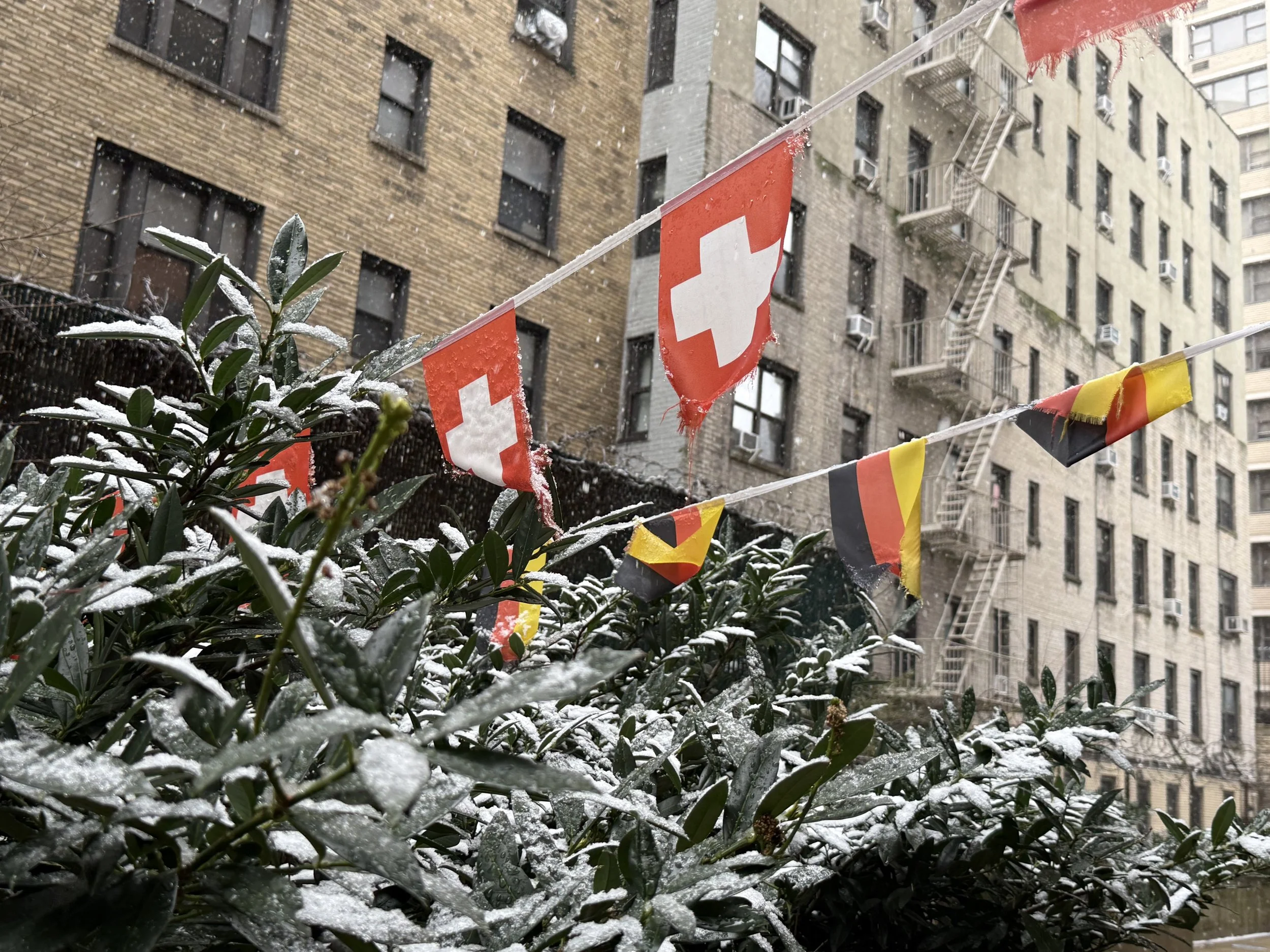
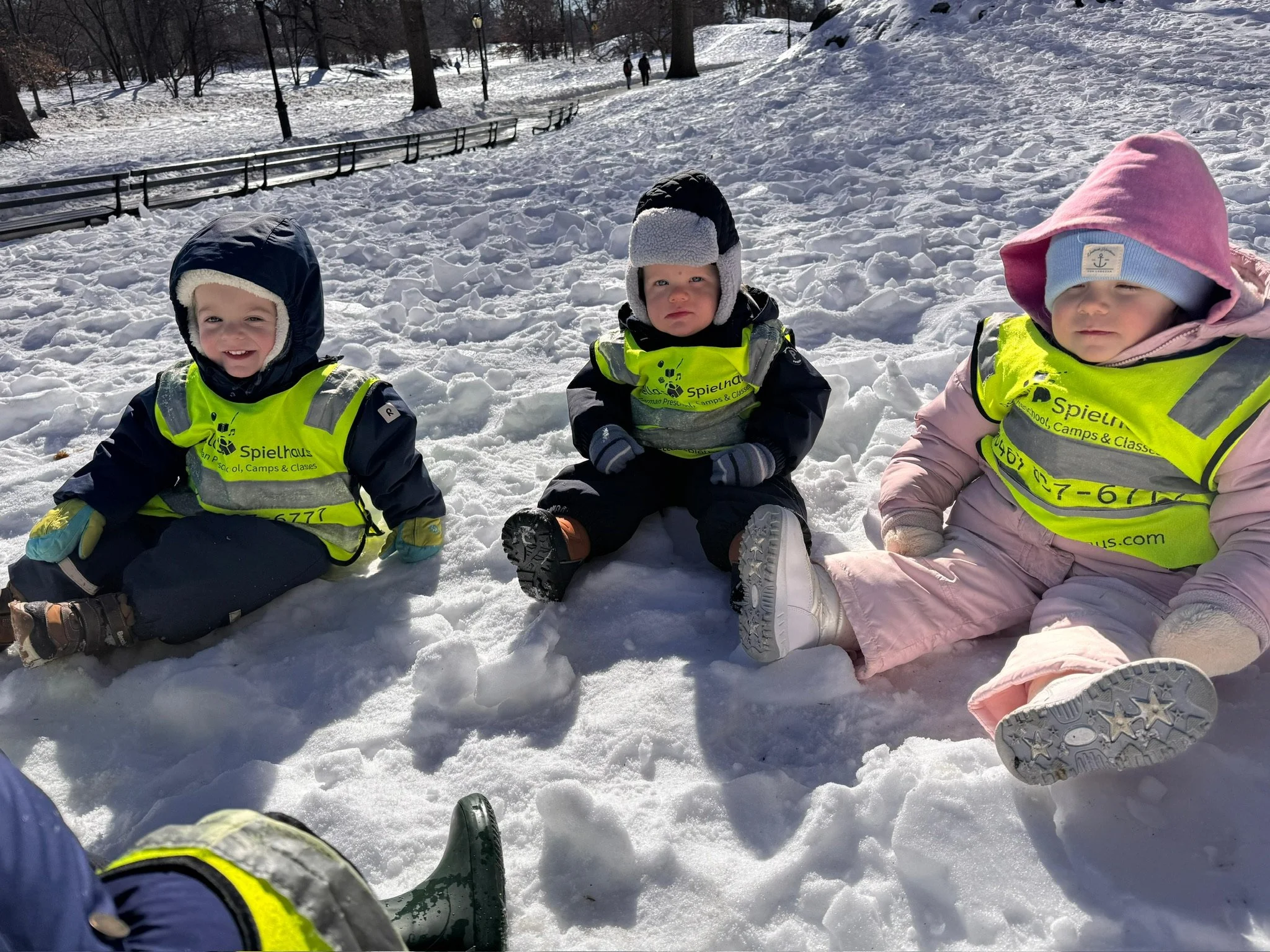
Winter in New York City has its own rhythm. The sidewalks are colder, the mornings darker, the coats bigger, the scarves longer. Children arrive wrapped in layers, “die Mütze,” “der Schal,” “die Handschuhe,” cheeks pink from the wind. Once the door closes behind them, winter takes on a different energy inside Rella’s Spielhaus.
At our German language daycare in NYC and our Saturday German school in Manhattan, winter is not quiet or sleepy. It is energetic, curious, creative, and full of language. Winter is something to move through, sing about, paint, experiment with, and talk about. Even when it is cold outside, inside we are busy being together, learning, playing, crafting, and exploring the season in German.
Winter in Motion
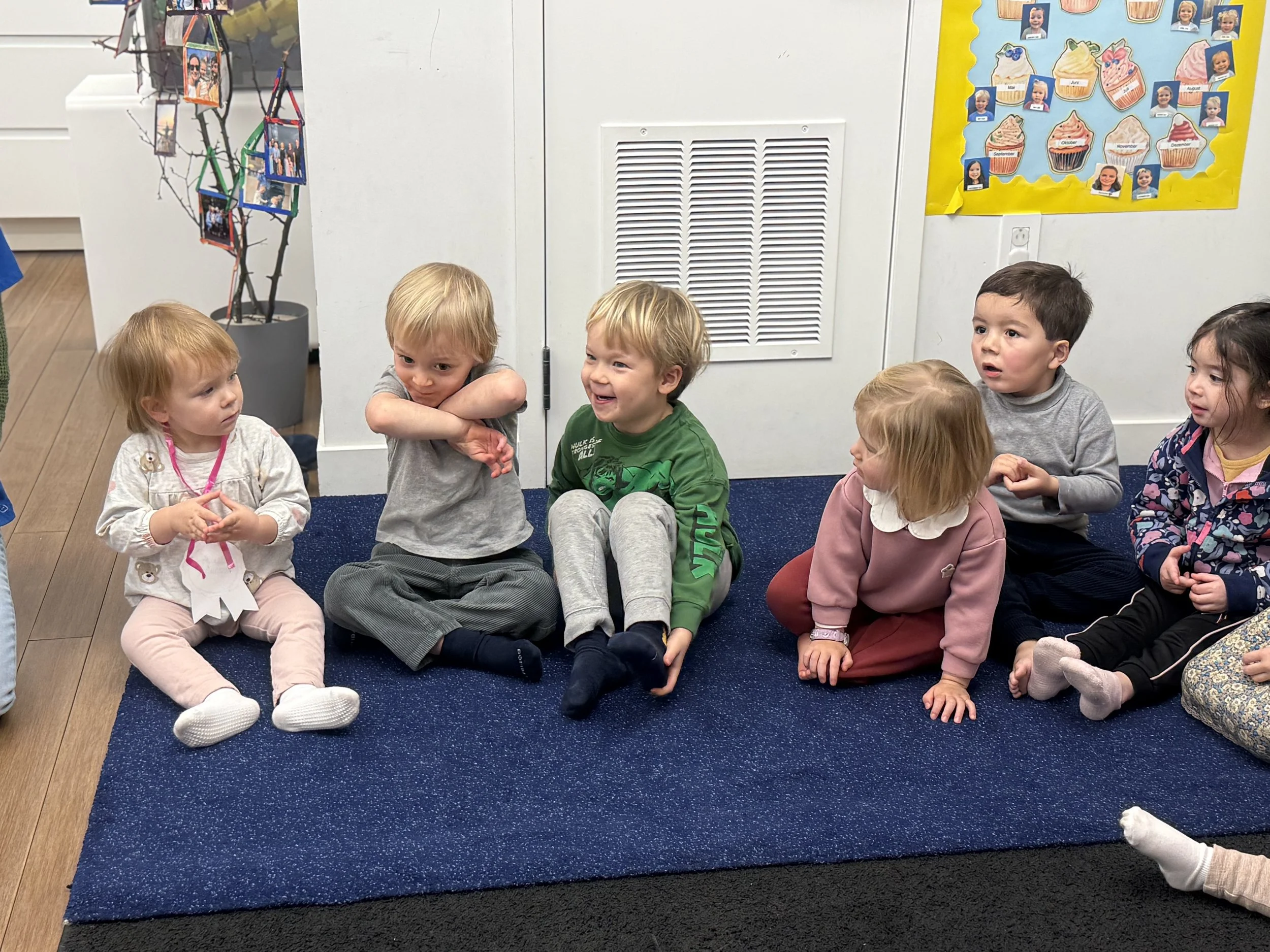
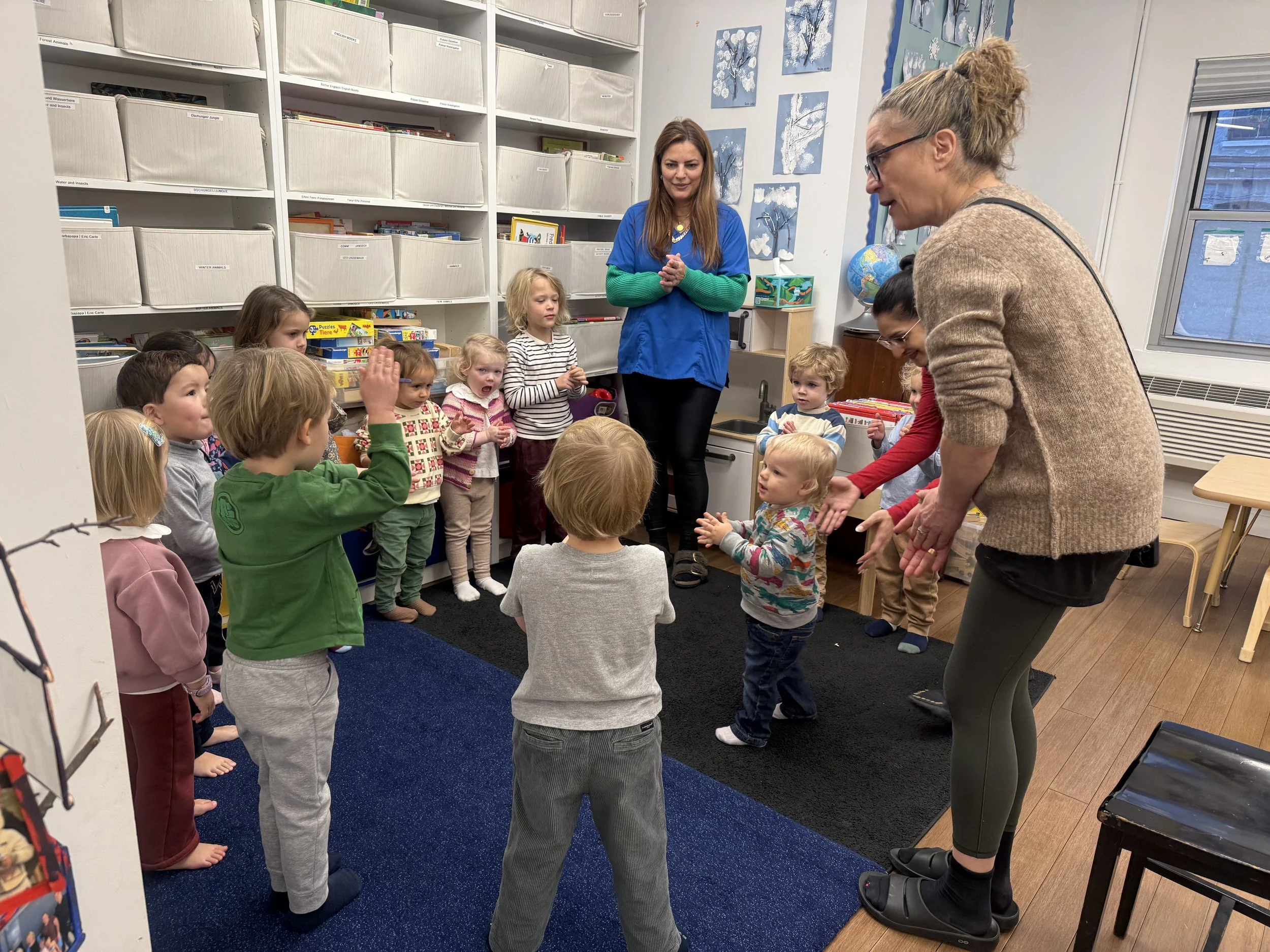
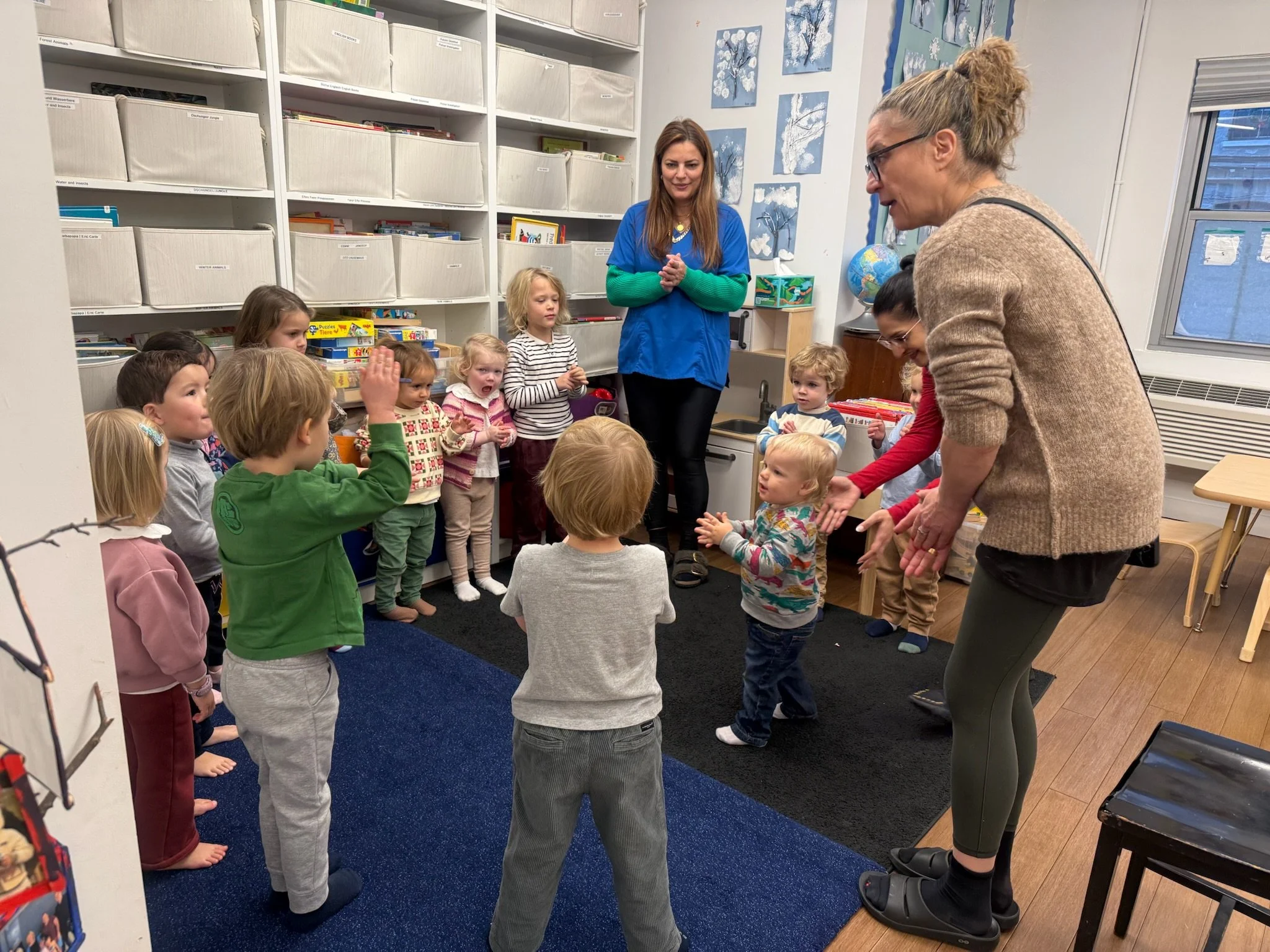
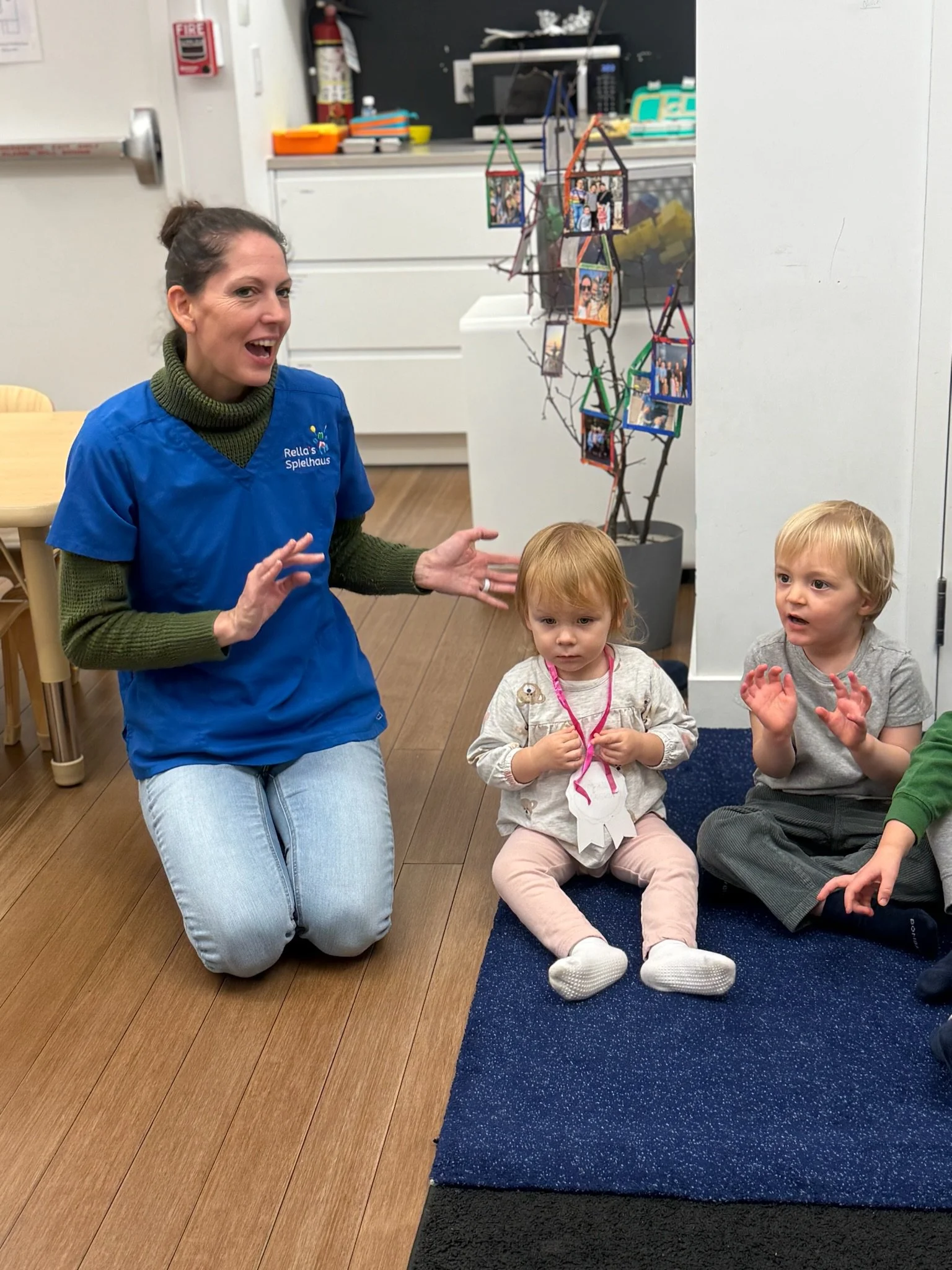
We begin with rhythm. Songs like SCHNI-SCHNA-SCHNEEMANN and ABC, DIE KATZE LIEF IM SCHNEE invite repetition, movement, and laughter. The rhythm of the words carries vocabulary naturally: “der Schneemann” (snowman), “der weiße Schnee” (white snow), “der Hut” (hat). The children clap, stomp, turn, and sing. Without noticing, they practice pronunciation, sentence patterns, and seasonal vocabulary.
Another favorite, A, A, A DER WINTER DER IST DA, fills the room with cheerful energy. Winter is no longer abstract. It is present, embodied, something we experience together.
We talk about “der Winter” and what makes it different. A surprise bag appears, filled with winter objects: “die Mütze” (cap), “der Schal” (scarf), “die Handschuhe” (gloves). Each item is pulled out, named, examined, sometimes tried on. Vocabulary flows because it is connected to something tangible and shared.
What Does Snow Feel Like?
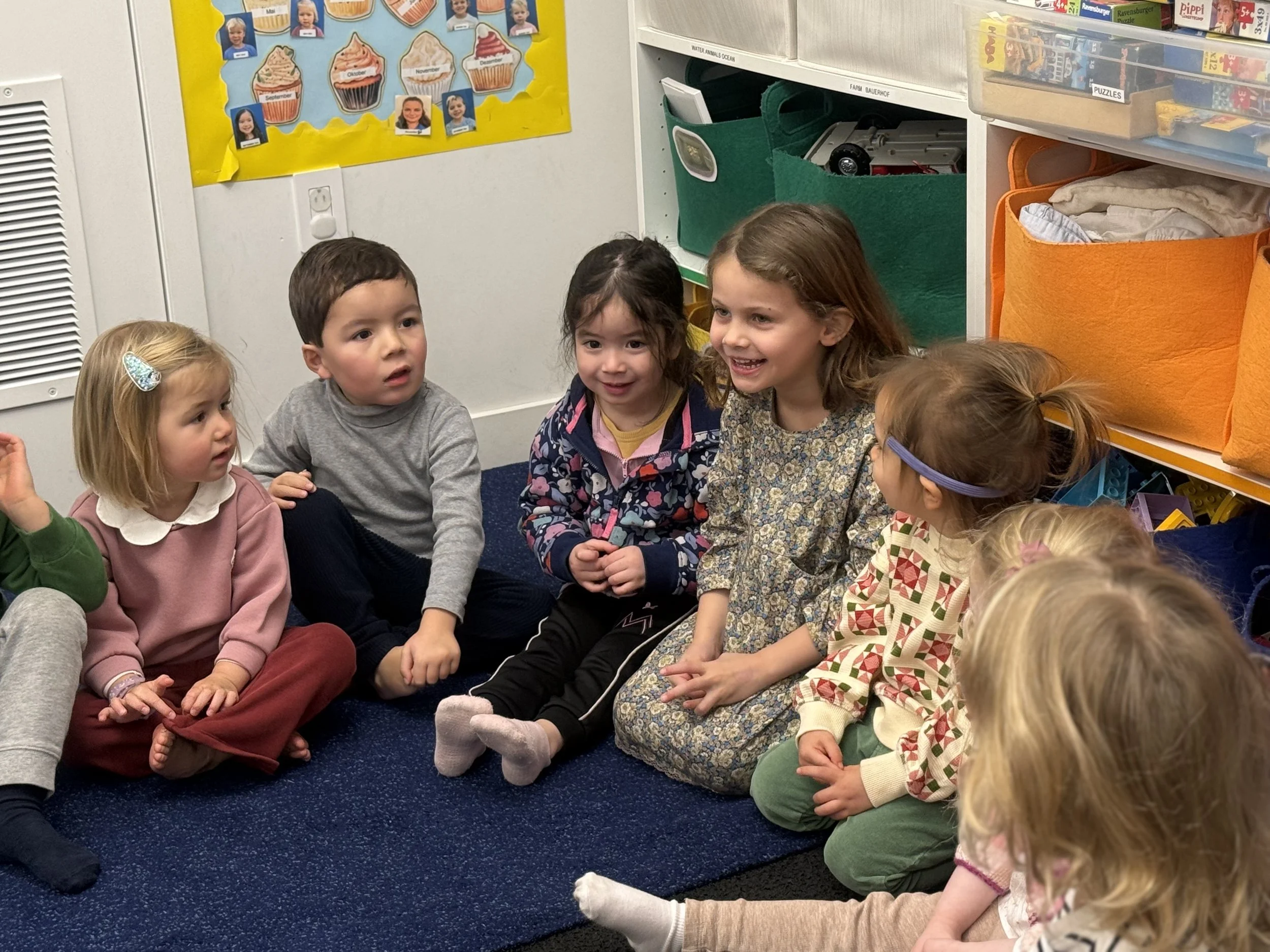
Our focus shifts to “der Schnee.” Looking at winter pictures together, we ask: Wie fühlt sich der Schnee an? The answers are thoughtful and varied: “kalt” (cold), “weiß” (white), “leise” (quiet), “weich” (soft), “nass” (wet), “glitzernd” (sparkling). Some children respond with gestures. Others speak softly. Some simply observe closely. We explore different types of snow. Is it falling snow or large flakes? Calm or wild? Is there a lot or just a little? How does snow sound? In a German immersion preschool setting, language becomes meaningful when it connects to sensation and curiosity. Snow is not just a word. It becomes texture, temperature, sound, and movement.
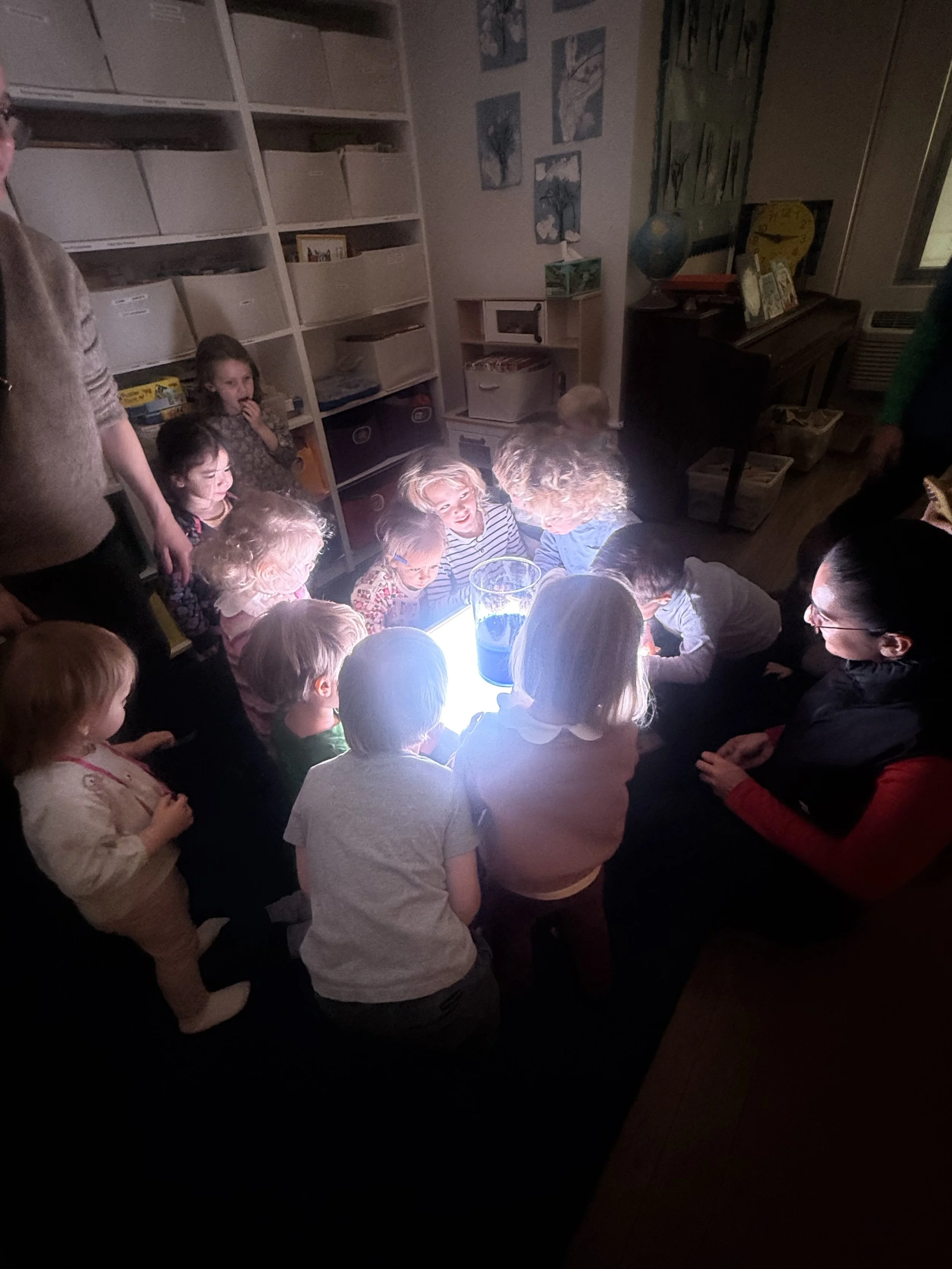
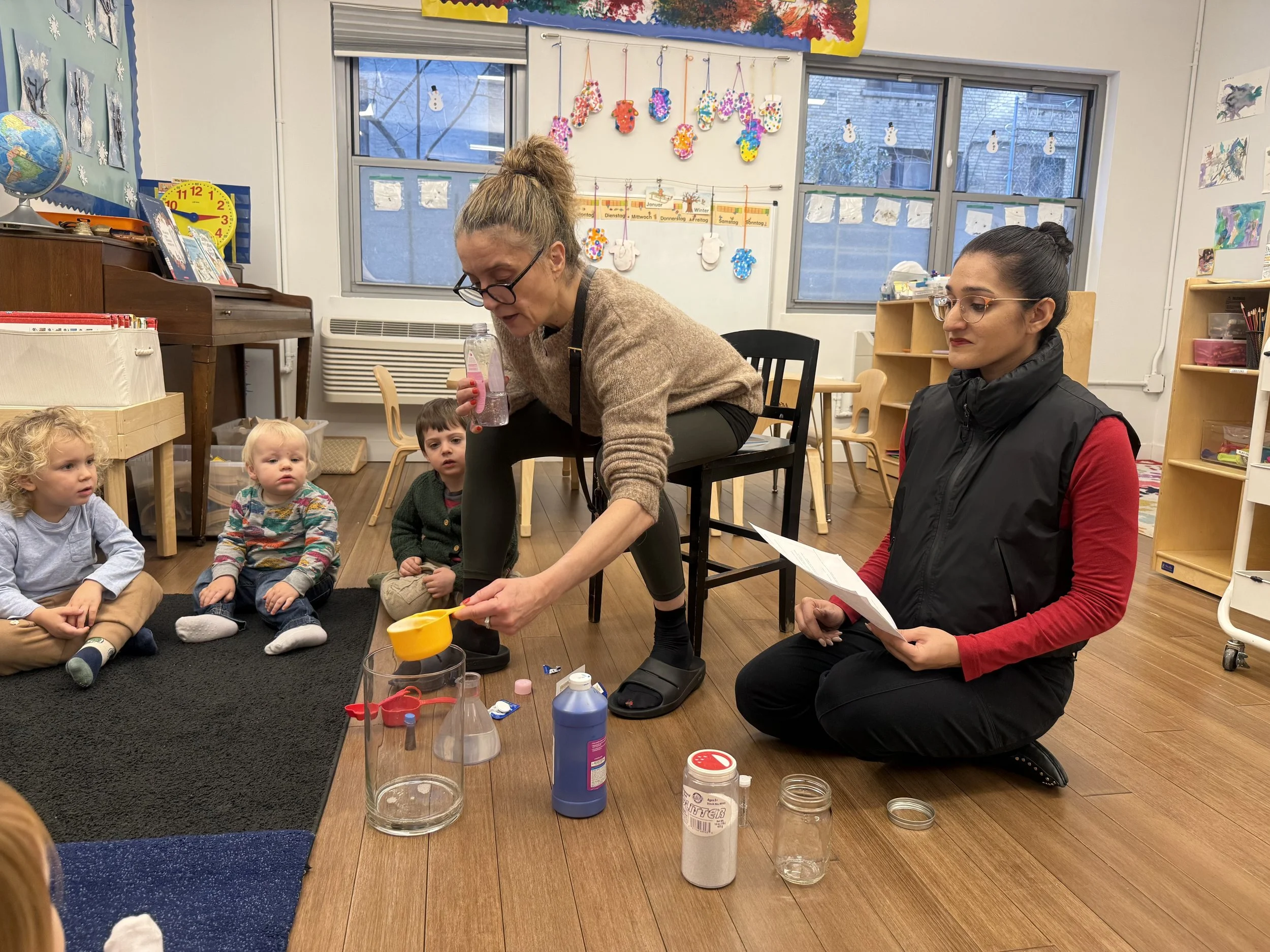
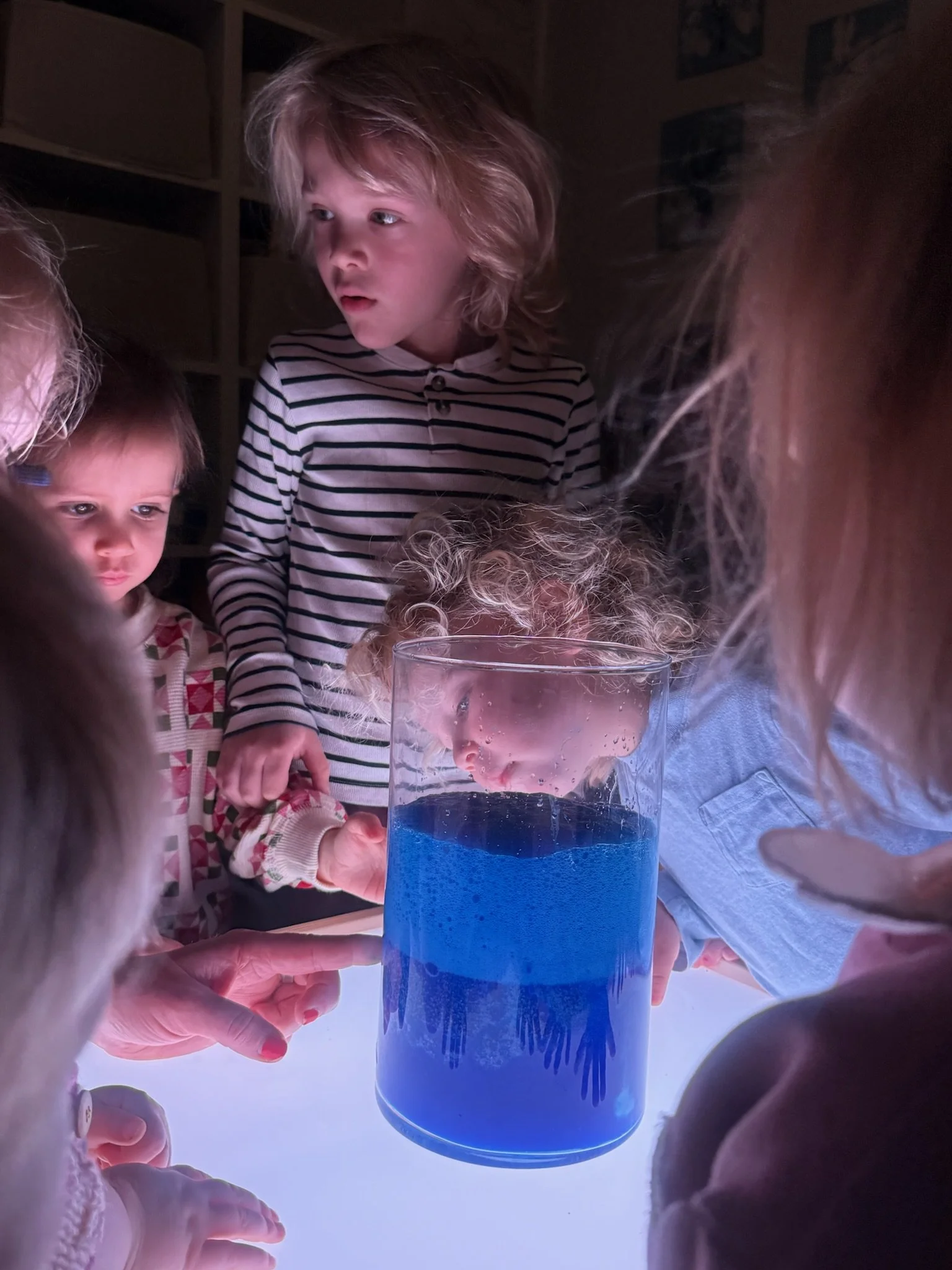
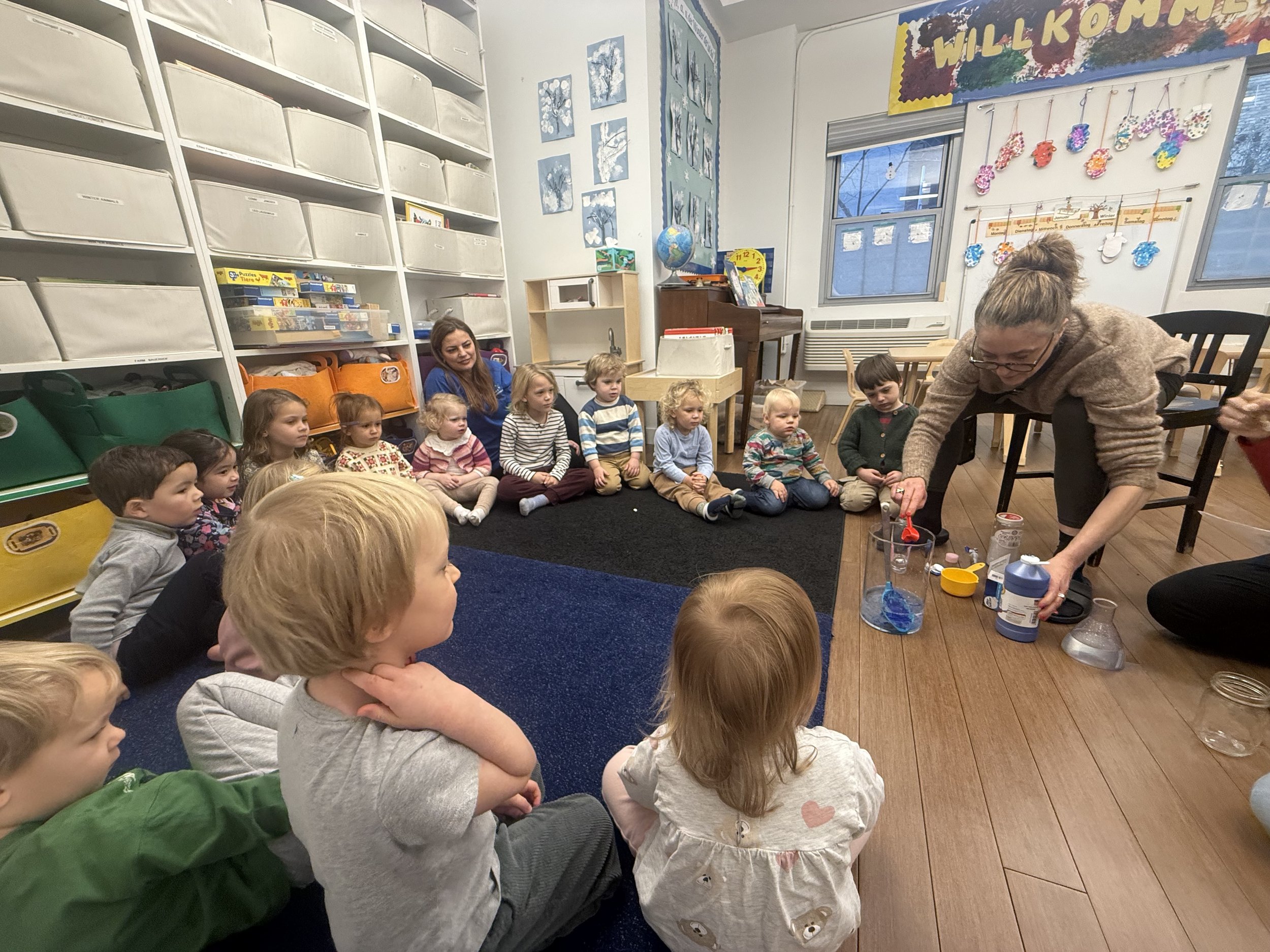
During “Morgenkreis,” we create a snowstorm in a vase using baby oil, water, color, glitter, and Alka Seltzer tablets. On the light table, a swirling blue winter storm appears. The children lean in, watching carefully as bubbles rise and shimmer. It looks like snow in motion and sparks new vocabulary and questions.
Snowmen, Mittens, and Creative Hands
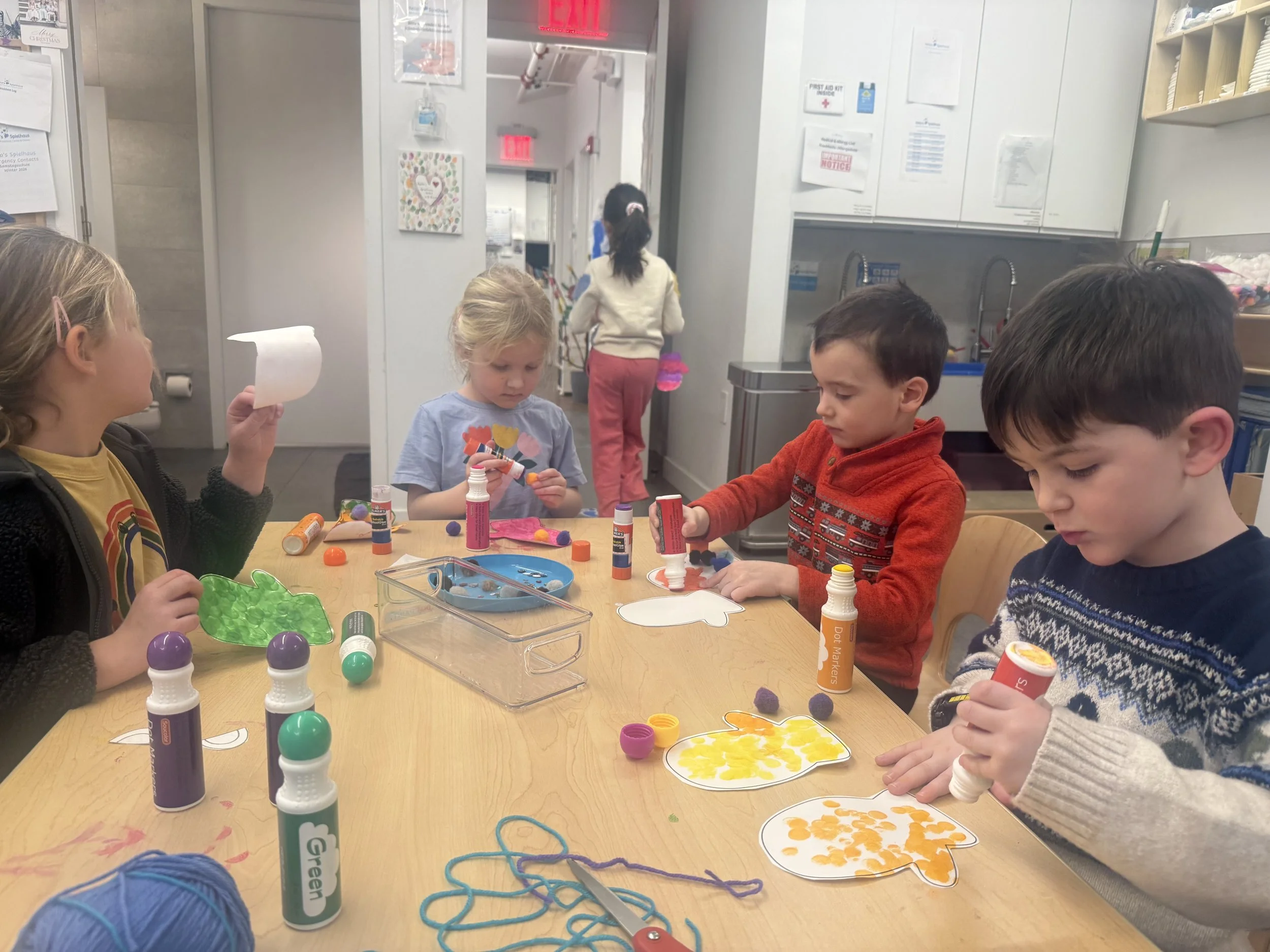
Winter also lives at our art tables. One cherished project is the creation of paper mittens. Each child decorates their “Handschuh” with dot colors, pompons, and glitter. A piece of yarn connects the pair, just like real mittens, so they can hang around the neck. The pride when the yarn is added is unmistakable.
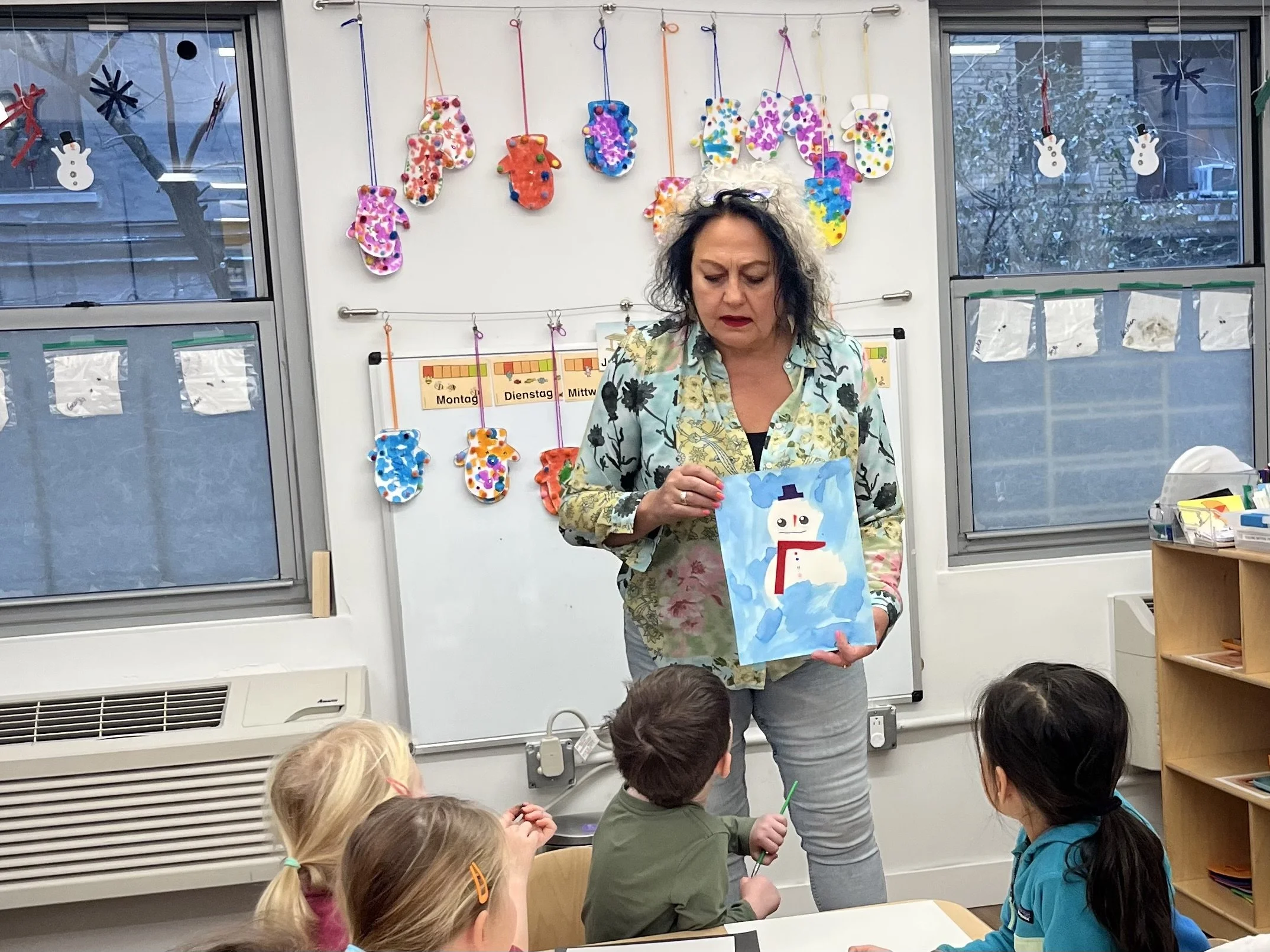
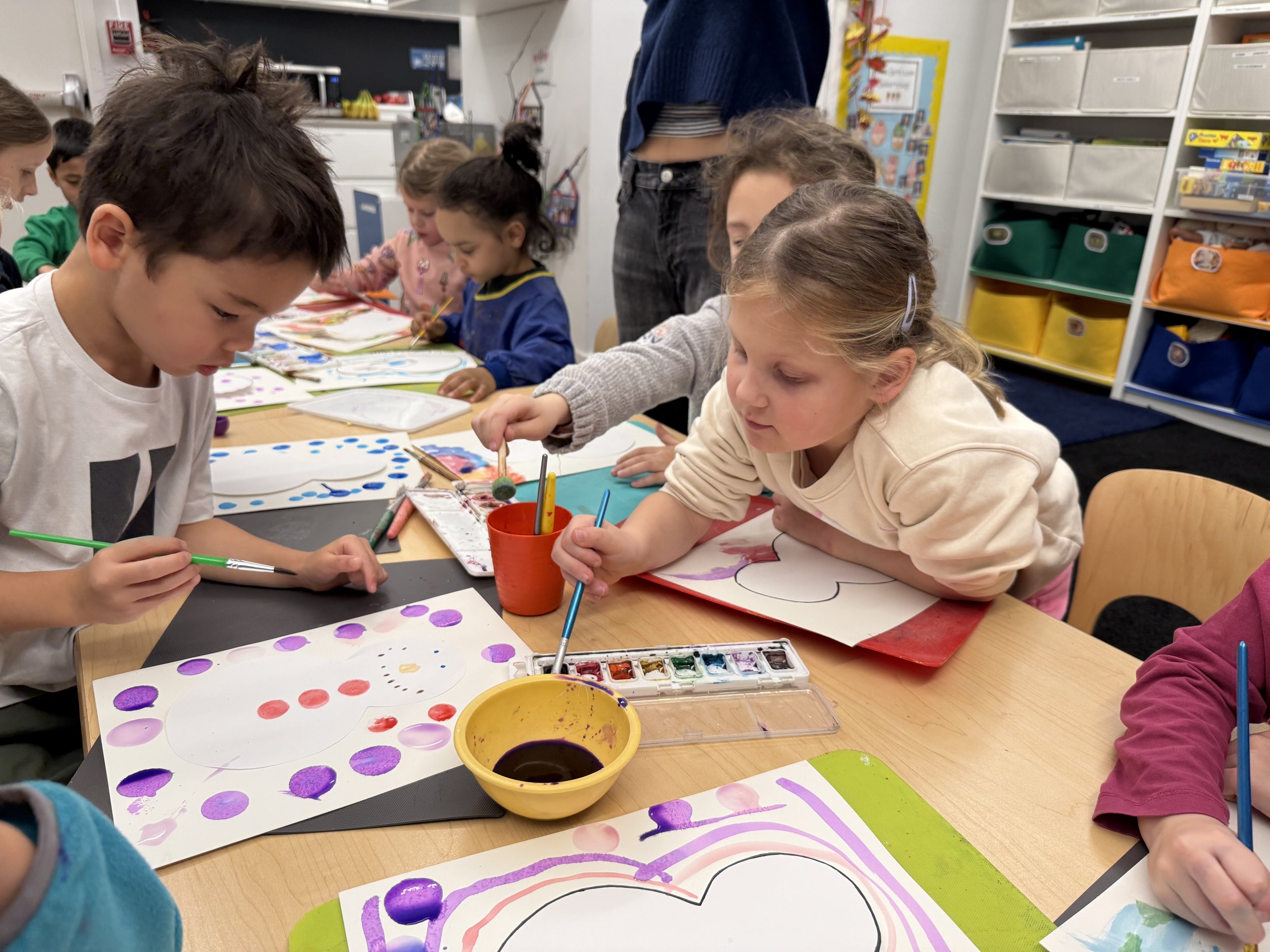
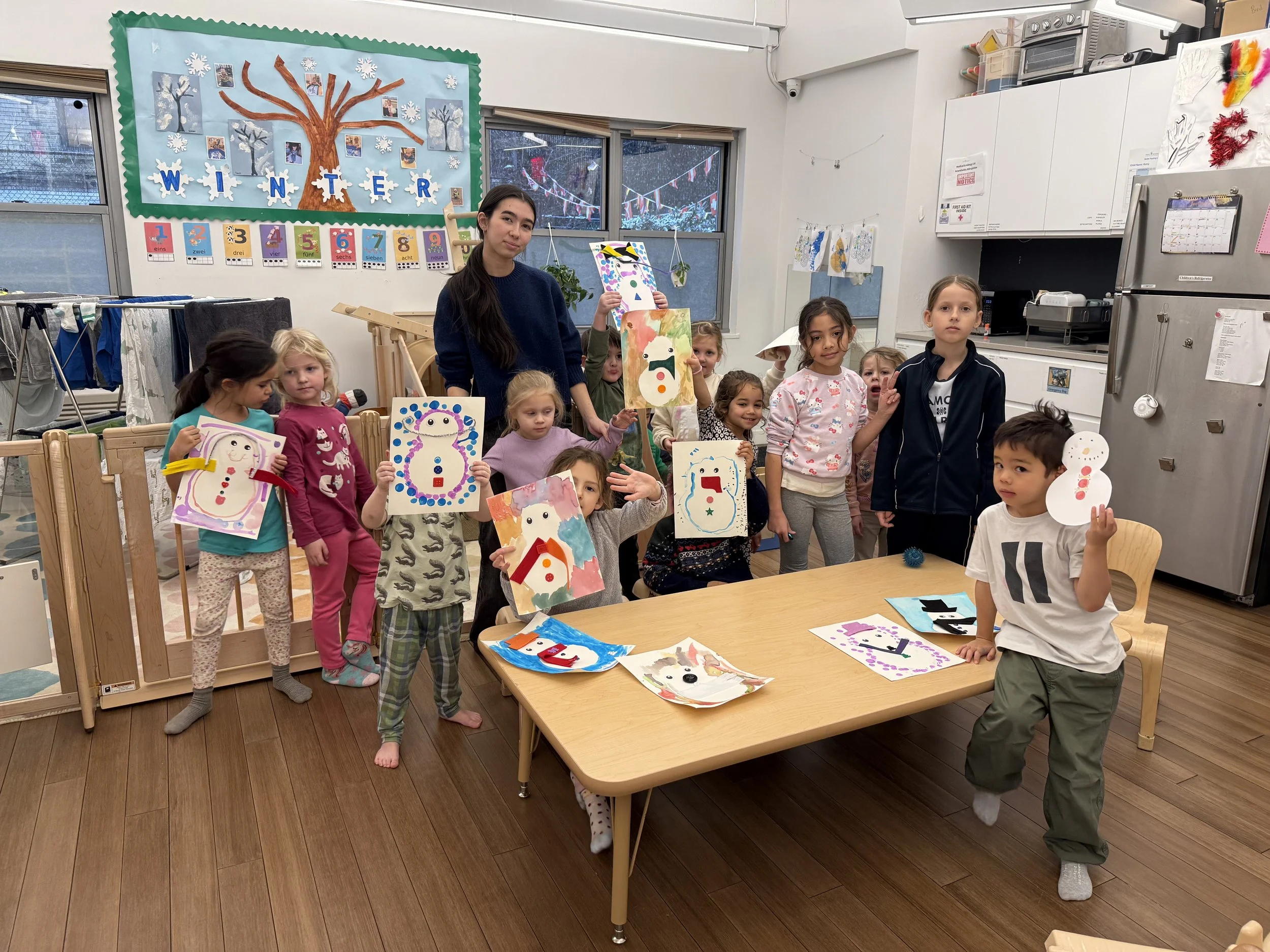
We also work on a two-step snowman project. First, watercolor backgrounds are created using a snowman stencil. Soft blues and whites blend into shimmering washes, setting a calm, focused tone. Later, we return to bring our snowmen to life with felt scarves, hats, eyes, and carefully chosen details. The children rotate through creative stations, gluing on embellishments, selecting felt colors, and assembling their snowmen with support where needed. Each snowman emerges with its own personality. Some are bold, some understated, some delightfully covered in sparkle.
“Schneeflocken” become another highlight. We talk about how no two snowflakes are the same anywhere in the world. Inspired by that idea and by a story in which snow is not always white, the children paint their snowflakes in colors of their choice. At the end, a bit of “Schneeglitzer” is added. Clean-up follows, and just as proudly as they paint, the children clean their own “Unterlage” and “Pinsel.” Independence and responsibility are part of our winter rhythm as well.
Tiere der Arktis — Looking Beyond the Snowman
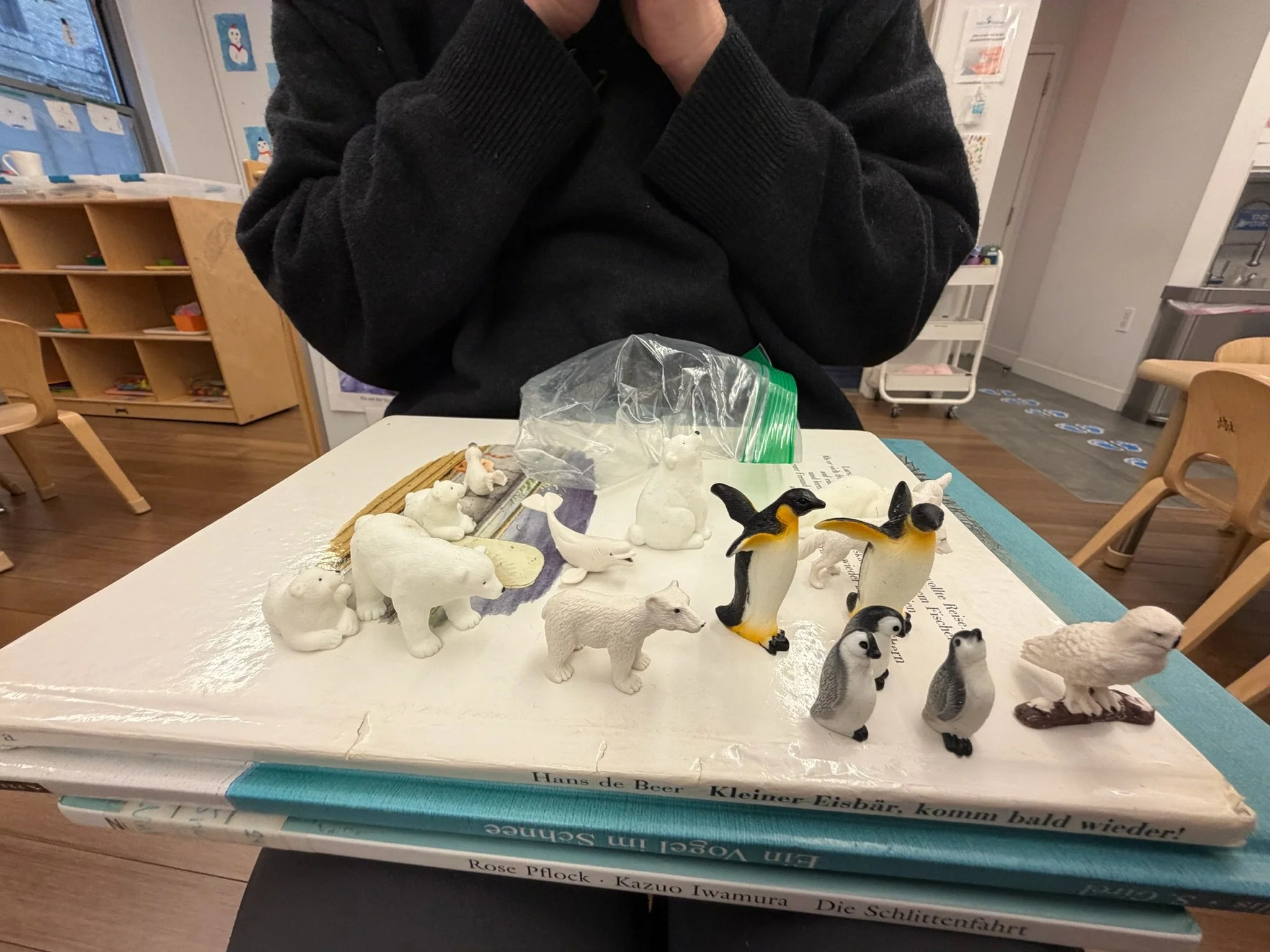
Winter does not stop at snowmen. Our theme “Tiere der Arktis” brings a special focus on “der Eisbär” (polar bear). Using photos and the globe, we explore the Nordpol and talk about how Arctic animals live on constantly moving sea ice. We discuss how polar bears swim and why their fur only appears white in sunlight. An important geographical distinction emerges. Penguins belong to the Südpol, not the North Pole. The children point out that penguins have “Federn” (feathers), which makes them birds, unlike polar bears with fur.
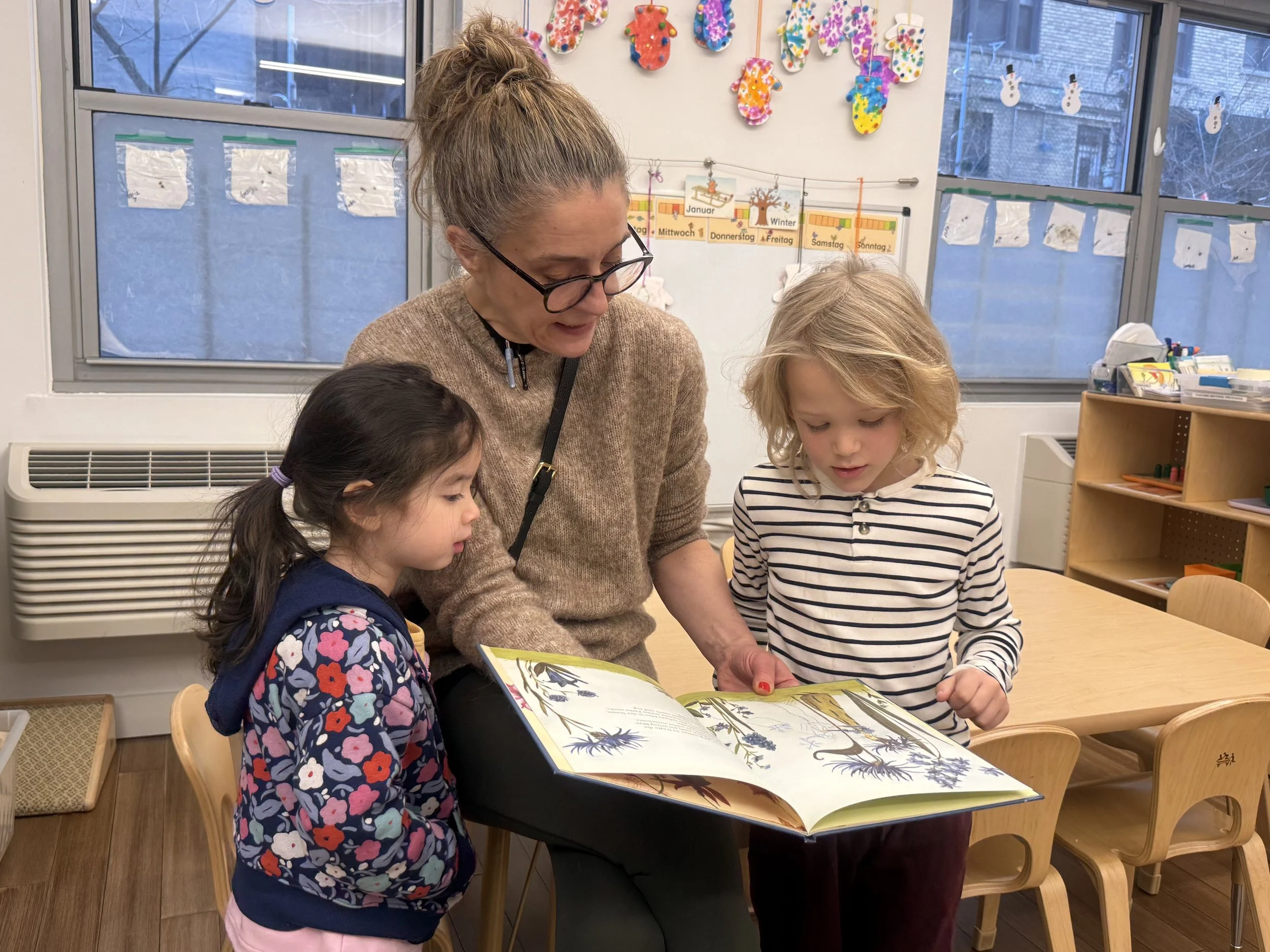
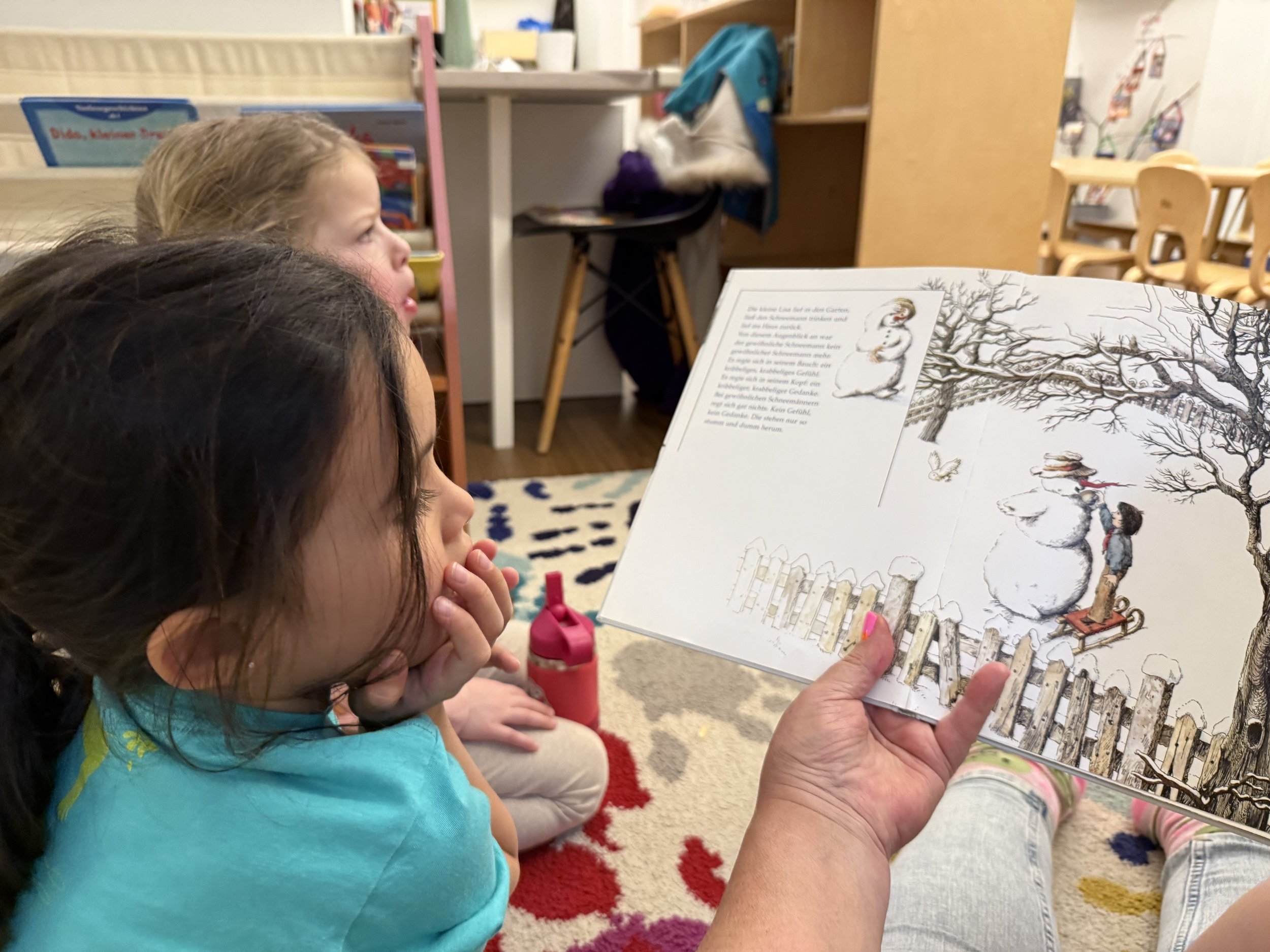
In our book of the week, the Schneemann transforms from a “Stehmann” to a “Gehmann” to a “Teemann.” Because he does not want to melt, he jumps onto an “Eisscholle” to join his friends, the “Eisbären.” Reading the same book repeatedly reveals something remarkable. The children move from listening to retelling and even predicting what will happen next. They understand that one event follows another, that one thing cannot happen without the other.
Winter Together
What makes winter at Rella’s Spielhaus special is not one activity or one craft. It is the rhythm of it all. Across our German immersion preschool and Saturday classes, language is alive in songs, experiments, art projects, and thoughtful conversations about snow and ice. Winter is active. It is playful. It is curious. Outside, it may be cold. Inside, it is movement, creativity, and community.
Winter at Rella’s is about being together, learning, moving, crafting, and laughing in German, even when it is cold outside.